Sacred statues often feature intricate hand gestures known as mudras, which carry profound symbolism. These hand gestures are not only aesthetically significant but also hold deep spiritual and philosophical meanings.
From Buddha to Hindu deities, sacred statues across various traditions utilise mudras to convey specific messages, virtues, and teachings. In this article, we will explore the symbolism behind mudras and their hidden meanings as depicted in sacred statues.
For more useful content and additional insights, please visit our website.
The Symbolism Of Mudras In Sacred Statues
Mudras are not just aesthetic features of religious statues; they are carefully chosen to represent specific qualities, teachings, or states of being. The symbolism hidden in these gestures can range from themes of enlightenment, protection, and compassion to wisdom, healing, and peace.
By understanding the meaning behind each mudra, viewers can gain a deeper comprehension of the spiritual message intended by the statue.
Anjali Mudra: The Gesture Of Reverence
The Anjali Mudra, also known as the prayer gesture, is one of the most widely recognised mudras in sacred statues. It involves pressing the palms of both hands together in front of the chest, often in a gesture of greeting or prayer. In statues of both Hindu and Buddhist deities, this mudra is a symbol of respect, humility, and devotion.
- Symbolism: The Anjali Mudra represents a sincere offering to the divine, symbolising the act of surrendering oneself in devotion and prayer. It is a gesture of reverence, often seen in statues of deities or enlightened beings such as Buddha, where it expresses the viewer’s respect for their wisdom and teachings.
- Meaning: The gesture signifies unity, balance, and harmony between the body, mind, and spirit. It also represents the meeting of opposites, such as the meeting of the left and right hands, symbolising the integration of dualities in spiritual life.
Abhaya Mudra: The Gesture Of Fearlessness
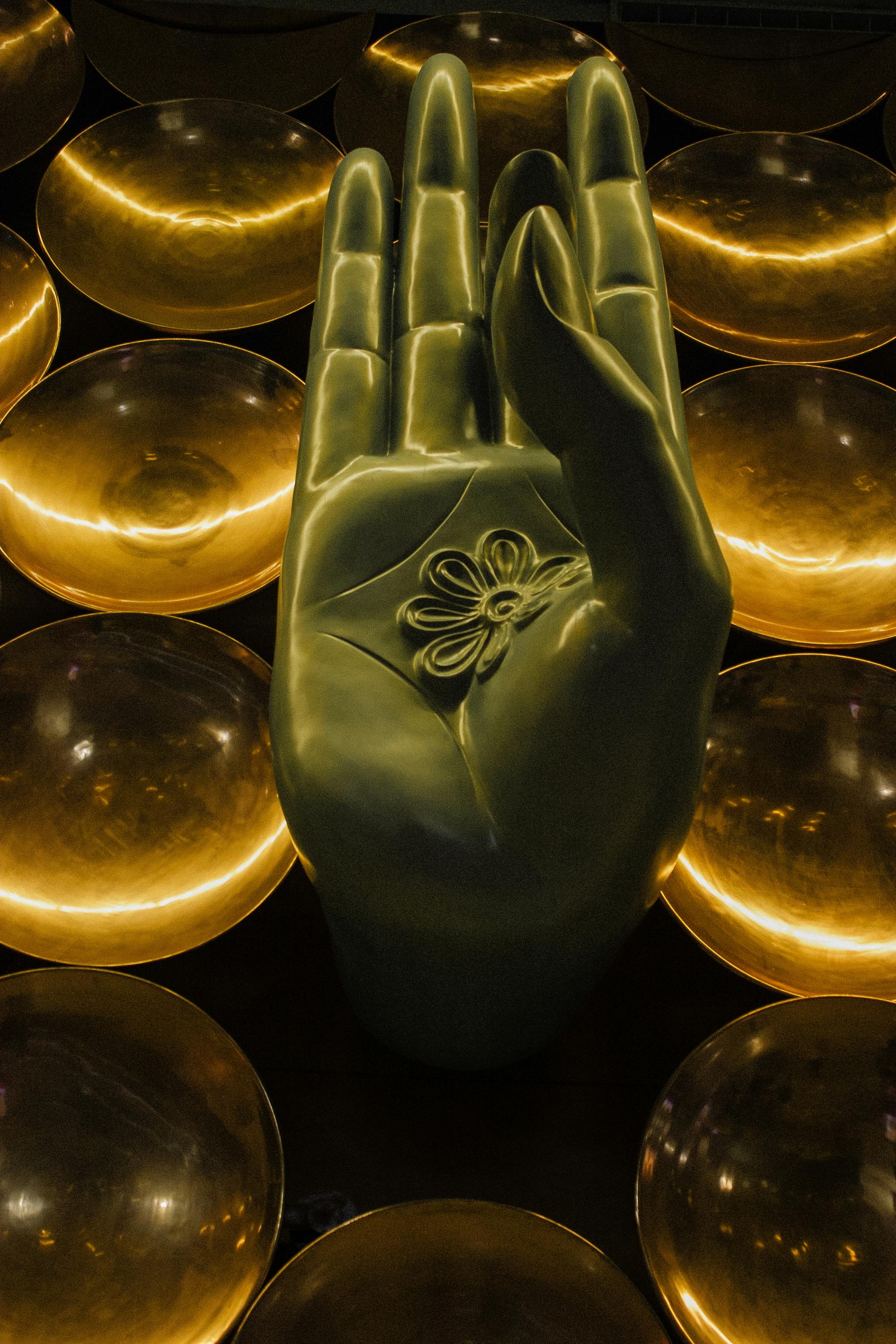
The Abhaya Mudra is another common gesture found in sacred statues, especially in depictions of Buddha and various Hindu deities. This mudra involves the right hand raised with the palm facing outward and the fingers extended, often positioned at shoulder height. It is a symbol of fearlessness, protection, and reassurance.
- Symbolism: The Abhaya Mudra conveys a message of safety, protection, and fearlessness. It is often depicted in statues of Buddha, symbolising the overcoming of fear and obstacles. In Hinduism, it is used to signify the ability to protect devotees from harm.
- Meaning: This gesture conveys a promise of protection and invites the viewer to release their fear. It is a gesture that reassures and assures the follower that the divine presence will guard and protect them from all forms of fear and harm.
Dhyana Mudra: The Gesture Of Meditation
The Dhyana Mudra is commonly associated with the Buddha in statues depicting him in a seated, meditative posture. This gesture involves placing the hands on the lap, with the palms facing upward and the right hand resting on top of the left. It is a symbol of deep concentration, meditation, and inner peace.
- Symbolism: The Dhyana Mudra represents the meditation process and the cultivation of inner calm. It embodies the pursuit of enlightenment through focused meditation and deep reflection. In Buddhist iconography, it symbolises the Buddha’s quest for wisdom and his journey toward spiritual awakening.
- Meaning: This mudra is a call to mindfulness and inner balance, inviting the observer to engage in contemplation and introspection. It represents the union of wisdom and compassion, reminding the viewer of the importance of meditation in spiritual practice.
Vitarka Mudra: The Gesture Of Teaching
The Vitarka Mudra is often depicted in statues of Buddha or other spiritual teachers. It involves raising the right hand to shoulder height with the thumb and index finger touching, forming a circle, while the other fingers are extended. This gesture is a symbol of teaching, discussion, and the transmission of knowledge.
- Symbolism: The Vitarka Mudra represents the sharing of wisdom and the transmission of teachings. The circle formed by the thumb and index finger signifies the cycle of teachings, illustrating that knowledge and truth are eternal and ever-flowing.
- Meaning: This mudra is typically used in statues where the deity or enlightened figure is teaching or sharing spiritual insights. It is a symbol of communication, instruction, and the continuous exchange of knowledge between teachers and students.
Varada Mudra: The Gesture Of Generosity
The Varada Mudra is often depicted in statues of deities such as Vishnu and Avalokiteshvara. It involves holding the right hand in a lowered position, with the palm facing outward and the fingers extended downward. This gesture is associated with generosity, compassion, and the granting of blessings.
- Symbolism: The Varada Mudra represents the act of giving, generosity, and mercy. It is a gesture that invites the viewer to open their heart and be receptive to divine blessings. In Hinduism, it is regarded as a symbol of the deity’s compassion and willingness to grant boons to devotees.
- Meaning: The gesture invites the viewer to ask for blessings and to receive divine grace. It is a reminder of the importance of compassion, generosity, and kindness in spiritual life.
Mudras In Sacred Statues: Their Spiritual And Philosophical Significance
The symbolism hidden in mudras found on sacred statues is deeply tied to the spiritual practices and philosophical teachings of the respective traditions. These hand gestures are more than just visual elements; they represent profound truths about human nature, the path to enlightenment, and the divine forces that govern the universe.
Communication Of Divine Qualities
Mudras in sacred statues communicate specific divine attributes and qualities. Each gesture is carefully chosen to convey the characteristics of the deity or enlightened being depicted in the statue. For example, the Abhaya Mudra communicates protection and reassurance, while the Dhyana Mudra invites a state of peace and contemplation.
- Symbolism: The mudras encapsulate the divine virtues such as compassion, wisdom, and fearlessness.
- Meaning: By observing and understanding the meaning of these gestures, devotees can connect with the qualities they represent and aspire to embody them in their own lives.
A Visual Language Of Spiritual Teachings
Mudras also act as a form of visual language, conveying spiritual teachings without the need for words. The positioning of the hands in each gesture is a direct expression of the deity’s teachings, offering insight into important spiritual concepts such as meditation, enlightenment, and compassion.
- Symbolism: Each mudra represents a specific teaching or concept, such as the Vitarka Mudra, which symbolises wisdom, and the Anjali Mudra, which signifies reverence.
- Meaning: Sacred statues with mudras serve as visual tools for learning and reflection. The observer is invited to meditate on the meaning of the gesture and integrate it into their spiritual practice.
Conclusion
Mudras in sacred statues are rich in symbolism, with each gesture representing profound spiritual meanings and teachings. Whether it’s the Abhaya Mudra, symbolising fearlessness, or the Dhyana Mudra, representing meditation, each hand gesture serves as a guide to understanding the spiritual truths of the traditions in which they are used.
By carefully observing the mudras on sacred statues, one can gain insight into the qualities and teachings of the deities they represent. These hand gestures serve not only as artistic representations but also as spiritual tools that communicate important messages about the nature of the divine, the path to enlightenment, and the virtues that guide spiritual practice.
Frequently Asked Questions
What Is The Purpose Of Mudras In Sacred Statues?
Mudras in sacred statues serve as visual representations of spiritual concepts and teachings. Each hand gesture carries deep symbolic meaning, representing qualities such as protection, wisdom, and compassion. These mudras help convey the divine message of the figure they accompany, allowing viewers to connect with the spiritual qualities being depicted.
How Do Mudras Impact Meditation And Spiritual Practice?
Mudras play a crucial role in meditation and spiritual practices by guiding the flow of energy and cultivating specific mental states. The hand gestures help focus the mind, promote inner peace, and enhance concentration. Practitioners use them to channel divine energy and connect more deeply with their spiritual intentions.
Can Individuals In Daily Life Use Mudras?
Yes, mudras can be practised by individuals in daily life as a way to cultivate certain virtues or meditative states. By performing specific hand gestures, one can invoke feelings of peace, fearlessness, or compassion. Incorporating mudras into daily life can help deepen one’s connection to spiritual teachings and enhance mindfulness in everyday activities.